

Start taking action now!
Over the past months, I’ve shared a lot about inclusive communication—its principles, its urgency, and the value it brings to individuals, teams, and communities. But theory only gets us so far. At some point, words must become action. Inclusive communication is not a checkbox or buzzword—it’s a daily practice. It’s how we show up, how we speak, and how we listen.
Here are five concrete ways I’ve learned to put inclusive communication into action—both personally and professionally. They may help you get started too!
1. Build Awareness: Start With Yourself
Inclusive communication begins with knowing your own lens. What are your assumptions? Which biases have shaped how you communicate?
For me, identifying as non-binary makes me very aware of the expectations and limitations built into language and social norms. Checking your own privileges and blind spots is uncomfortable—but essential. It’s not about guilt; it’s about growth.
Your first action point:
- Reflect regularly: After each interaction or meeting, ask yourself whose perspectives were centred—and whose were missing.
2. Choose Your Words: Speak With Intention
Words are powerful. They can affirm or exclude in a single breath. That’s why it matters how we use them—especially around gender, identity, culture, and ability.
Think about names and pronouns. Avoid generalizations. Use language that invites rather than defines. Communication should open space, not close it.
I’ve shared a checklist for inclusive communication that offers guidance if you want to explore this further. I’m working on posts to help you to speak, write, design and present inclusively. In the meantime: just ask me.
Your first action points:
- Practice using gender-neutral and inclusive terms, even in casual speech.
- Replace limiting phrases like “you guys” or “normal” with “everyone,” “folks,” or “typical in this context.”
3. Make Room: Share the Stage and Step Back
Inclusive communication means knowing when to speak—and when to listen. In group settings, this often means making space for voices that are less heard—and resisting the urge to dominate.
If you’re leading a team, make inclusion a practice: invite diverse perspectives, rotate who speaks first, and normalize saying, “I don’t know enough—what do you think?”
Your first action points:
- In group settings, invite quiet voices to share: “Would you like to add something?”
- Notice patterns: If certain people always speak up first, create intentional pause time so others can contribute.
4. Challenge the Default: Redefine What’s “Normal”
One of the biggest barriers to inclusive communication is the myth of “normal.” What’s considered “standard” in one culture or setting may be exclusive in another.
Question binary thinking. Question default settings. The more we challenge what’s taken for granted, the more room we make for different ways of being, expressing, and connecting.
Your first action points:
- Review your materials—slides, writing, visuals. Who is represented? Who isn’t?
- Ask: “Would this language, image, or assumption make someone feel left out?”
5. Stand for Something: Put Inclusion Into Your Principles
Inclusive communication shouldn’t be an afterthought; it should be built into your everyday work. Whether you’re writing content, designing experiences, leading workshops, or setting company culture—apply inclusive thinking from the start.
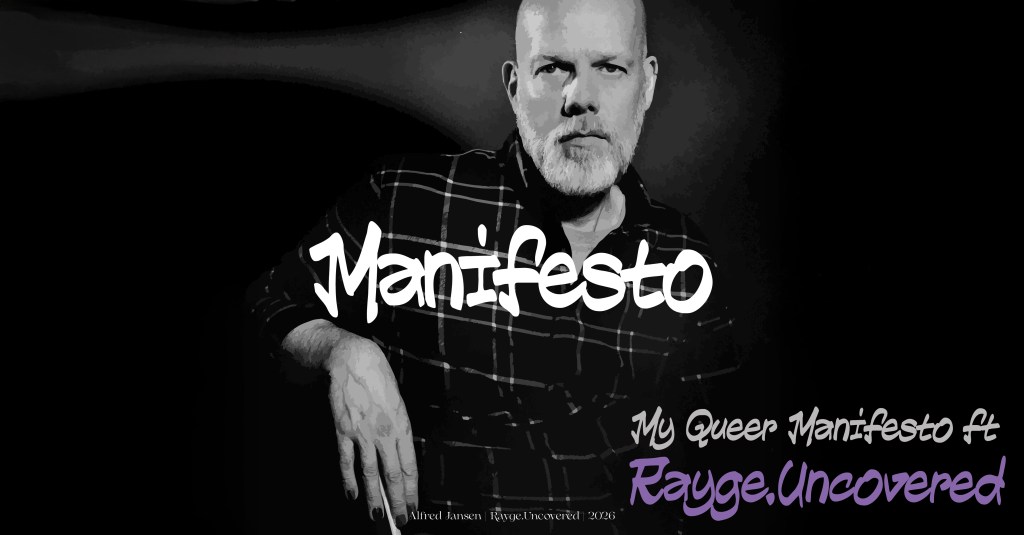
It’s not just about how you talk; it’s about what you stand for. That’s why I created a personal Manifesto—a living set of values that guides my work: truth, respect, equity, inclusion, and accountability.
By turning those values into a daily practice, I’ve seen firsthand how they shape more trust, connection, and impact. If you haven’t created your own manifesto, I encourage you to try. It’s a powerful anchor in uncertain times. Here’s how you can create one yourself.
Your first action points:
- Revisit your team’s or your own communication guidelines. Do they name inclusion as a priority?
- Create or adopt a manifesto. Mine is rooted in respect, truth, and empathy—feel free to use it as a starting point to define your own.
Putting Inclusive Communication Into Daily Practice
Inclusive communication is not about perfect speech or endless disclaimers. It’s about intention, openness, and accountability.
It means being open to changing your mind and the way you communicate. Putting words into action means being real, responsive, and responsible in how we relate to each other.
If you’re ready to explore how this looks for yourself, in your work, or in your community, feel free to contact me or check out how we can collaborate. ALL ABOUT INCLUSIVE COMMUNCATION.



 alfred-jansen.com