

This post is part of my summer series Bridging Photography and Communication, where I explore what photography teaches us about inclusive communication. Today, the topic is Timing—a principle that can make or break both a photo and a message.
This week’s topic: Timing.
Please check my privacy and copyright statement below.
What Timing Means in Photography
In photography, timing is everything. Press the shutter a second too early or too late, and the magic moment is gone. The right timing captures the exact expression, the movement of light, or that once-in-a-lifetime scene. Think of it as the heartbeat of an image—the moment that gives it life.

What Timing Means in Communication
In communication, timing plays an equally powerful role. It’s not just what you say, but when you say it. A message delivered too soon might feel irrelevant. Too late, and the opportunity to connect is lost. In today’s world, with the flood of information, misinformation, and disinformation, timing matters more than ever. People are overwhelmed. That means your message needs to arrive at the right moment to truly resonate and break through the noise.
Why It Matters Now
Take urgent global issues like the genocide in Gaza. Timing determines impact: speaking up too late risks silence being perceived as complicity; speaking without care risks adding to confusion. Inclusive communication demands not only that we act—but that we act at the right moment, with clarity and purpose, so the truth is seen and heard. Timing can be the difference between driving meaningful change and being lost in the noise.
What You Can Learn From Photography
Photographers anticipate the moment—they study the light, the movement, the emotion—and press the shutter with intention. As communicators, we can do the same: watch, listen, and choose the moment when our message can land with the greatest clarity and empathy. In both photography and communication, timing shapes impact.
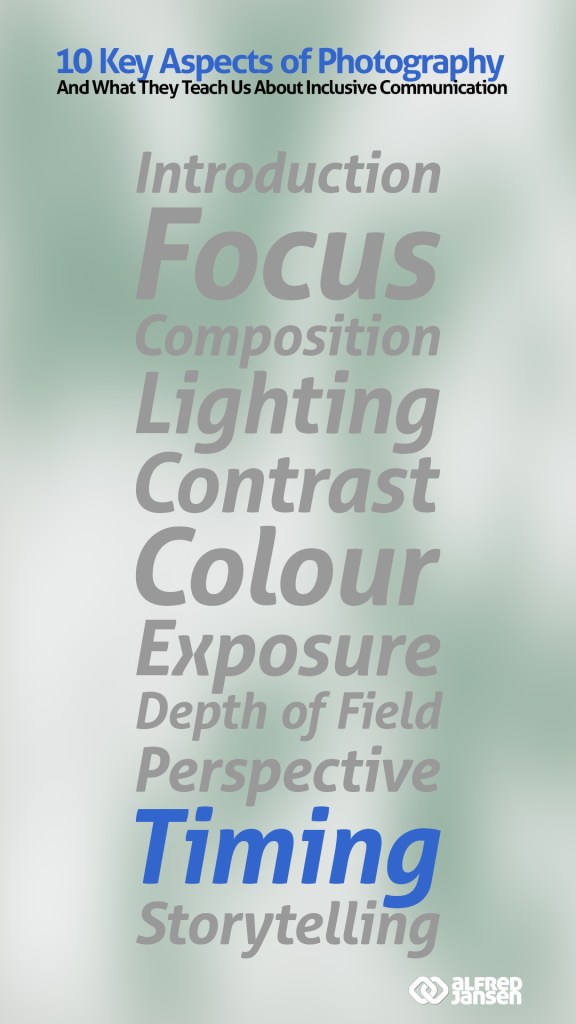
Coming Up Next Week:
Next week: I’ll explore “Storytelling”—why the stories we tell (and how we tell them) matter more than ever in creating connection.




 alfred-jansen.com