How a queer approach to communication will add to your creativity
Inclusive Communication has been at the heart of my work. It’s not just something I write about—it’s something I live every day through my photography, my activism, and the way I connect with people. It helps me listen more deeply, speak with care, and create spaces where more voices can be heard. Over the past months, I’ve shared posts about Inclusive Communication and what it means in practice. Now, I feel it’s time to take the next step: to move from inclusive to queer communication.
My Principles of Inclusive Communication
For me, Inclusive Communication is about respect and openness. I’ve seen how it touches so many areas of life:
- Gender diversity – as someone who is non-binary, being seen and acknowledged without compromise is central to my work and my life.
- Cultural diversity – I’ve learned so much from working in international spaces where different traditions and ways of being enrich every conversation.
- Age diversity – I’ve challenged ageism in my art, showing that creativity and relevance don’t belong to one generation.
- Disability and accessibility – I’ve become more mindful of accessibility, learning that inclusion starts by designing communication so everyone can take part.
- Socio-economic diversity – I often notice how privilege shapes who gets to speak. Naming that imbalance is the first step to changing it.
These principles guide not only how I write, but also how I approach photography: noticing the unseen, giving space to what is overlooked, and opening up stories that matter.
Read my posts on Inclusive Communication here.
Moving into Queer Communication
Now I want to go further. For me, Queer Communication means going beyond fairness and respect to embrace fluidity, play, and imagination. It’s about asking: what if communication could be freer, braver, and more creative?
In the coming series, I’ll explore:
- Dis- and Misinformation – how queer voices are twisted or erased, and how I work to counter that.
- Writing and Photography – the ways I use creativity to express queer truths in my projects.
- Media and Social Platforms – spaces I use and critique, where queer narratives are both challenged and reclaimed.
- Bullying and Exclusion – something I’ve seen and experienced, and why I believe safer spaces are possible.
- Generational Perspectives – how queerness shows up differently across ages, and how I bridge those voices.
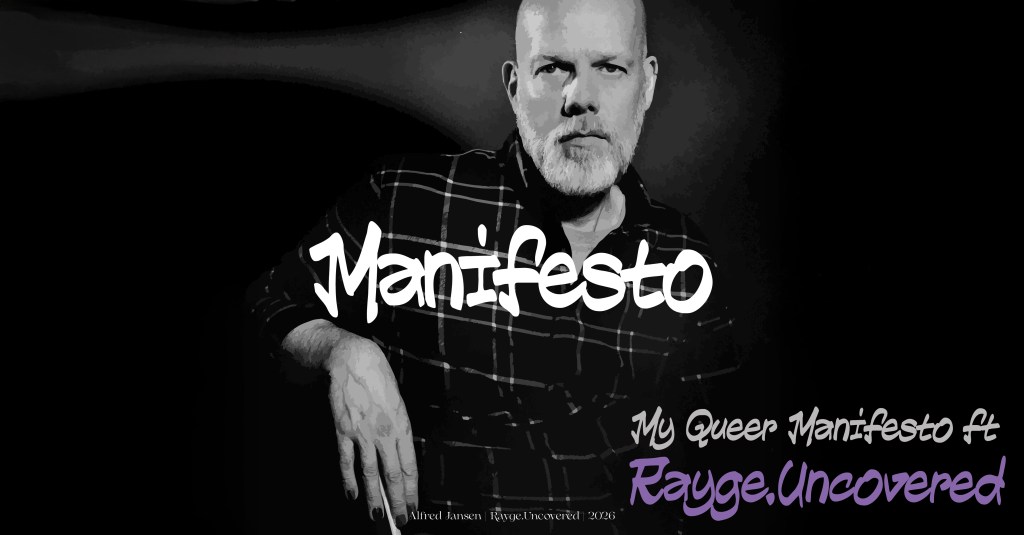
- A Queer Manifesto – my attempt to sketch a shared vision for freer, braver communication.
What Queer Means to Me
For me, queer is more than an identity—it’s a way of living and connecting. It resists boxes, embraces fluidity, and makes space for ambiguity, humour, and vulnerability. Communicating queerly means not being afraid to question power, to resist norms, and to bring creativity into how I tell stories and how I listen.
Why It Matters
Inclusive Communication gives me the ground: fairness, clarity, respect. Queer Communication builds on that ground by adding imagination and creativity. That creativity is what makes life more valuable, respectful, and exciting. It pushes me to experiment with language and photography, to create images and words that surprise, move, or even unsettle—because that’s where change begins.
I’ve seen this in my own work: in projects that challenge stigma around HIV and age, in photography that tells the story of waste and care in new ways, and in moments of activism where creativity shifts the conversation. These are the moments when communication feels alive and transformative.
That’s why I’m excited to share this new series with you.
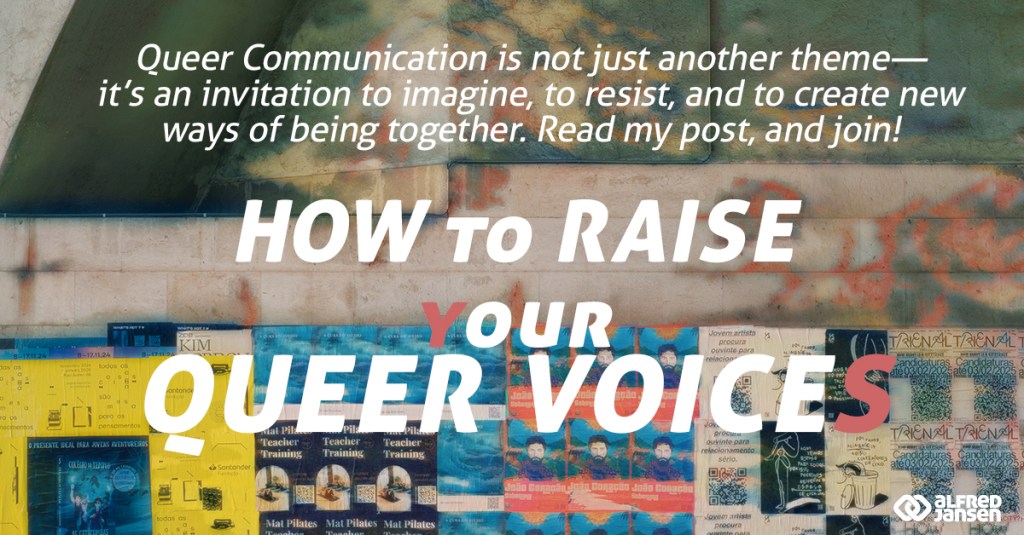
Because Queer Communication, for me, is not just another theme—it’s an invitation to imagine, to resist, and to create new ways of being together.
🌈 Check out my posts on Queer Communication in the coming weeks, right here on alfred-jansen.com. Let’s keep shaping new ways of connecting that reflect the world we all deserve.


 alfred-jansen.com